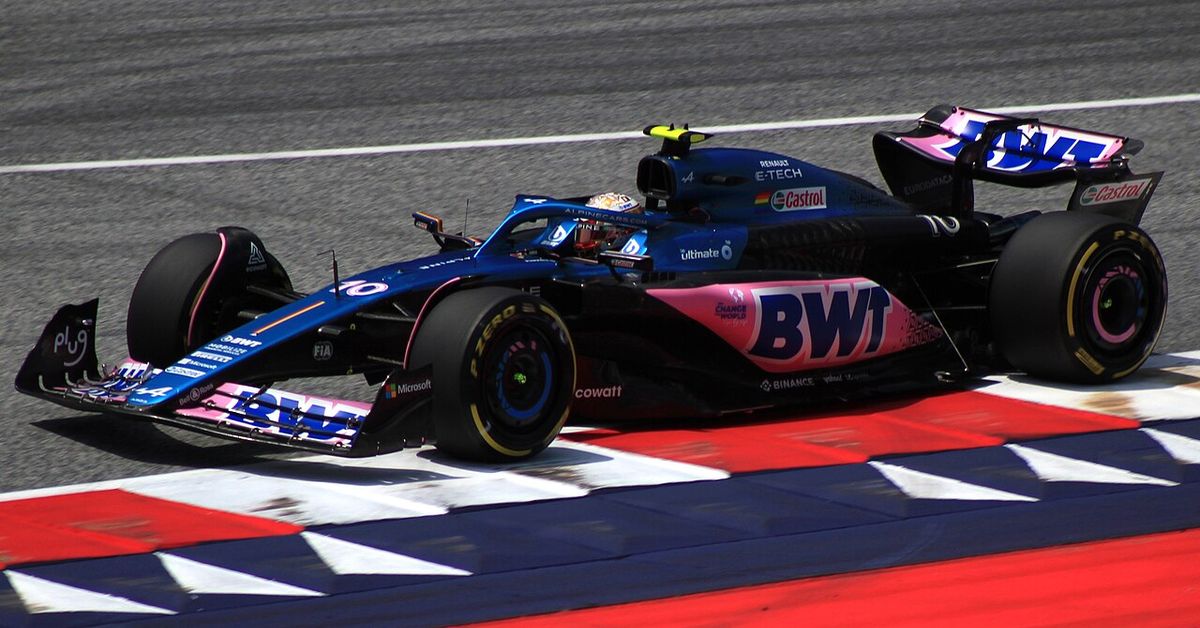
Formula 1 fans are used to hearing complaints from drivers and commentators alike when a car is racing in the ‘dirty air’ of the car ahead, but what actually is dirty air and what causes it?
It has always been an issue throughout F1’s long history, but as the cars have become more dependent on aerodynamics, the disruption caused by dirty air has only increased.
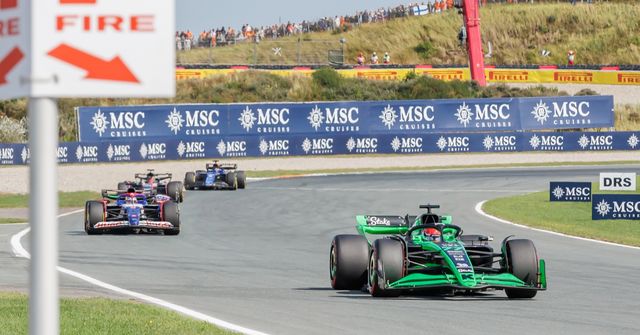
Dirty air is the turbulent air left behind by an F1 car as it travels around the track. It is disruptive for a following driver as the air ahead of them is disturbed, and therefore the car's wings and other aerodynamic elements do not perform as well as they should. This is why teams try to pit their drivers into ‘clean air’, so that drivers can maximise the performance of their cars.
Dirty air is not new in F1
Dirty air has always been an existing problem in the sport, made worse by the evolution of the cars’ aerodynamics, particularly the front and rear wings. It also affects tyre grip and makes overtaking more challenging as it impacts downforce, making the slipstream - a pocket of low-density air behind an F1 car - desirable. Better downforce means better grip and better braking, as well as better cornering speed, so any disruption to the downforce is absolutely crucial.
How has the impact of dirty air changed over time?
During Formula 1’s formative years, between the 1950s and the 1970s, there was far less reliance on aerodynamics than we have now, so while dirty air existed, drivers could still follow each other relatively easily. When ground-effect cars were introduced in the late 1970s and into the 1980s, airflow became more important, and this made following another car harder than it had been before.
In the 1990s, dirty air became a far bigger challenge as F1 cars became more complex. Cars began to generate a significant amount of downforce with the introduction of more sophisticated wing designs, which created more turbulent air. This challenge continued well into the 2010s, and a following car could lose approximately 50 per cent of its downforce, making it difficult to follow closely through corners.
In 2022, Formula 1 introduced a new set of technical regulations that brought back the ground-effect design with a simplified front and rear wing. The aim was to reduce dirty air so that cars would be able to follow each other more easily, promoting closer battles across the grid.
Dirty air remains a problem in F1, but the 2022 regulation change - accompanied by the 2026 set of technical regulations - has paid off, with closer racing across the grid and tighter championship battles than fans have seen in a long time.