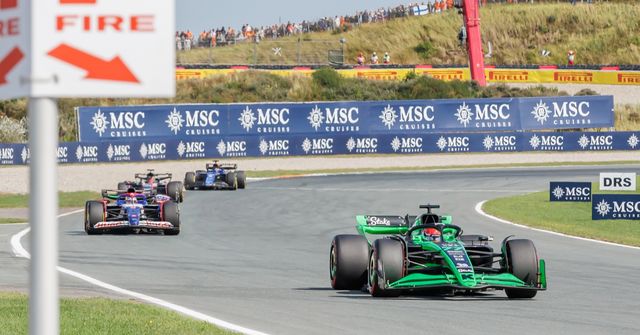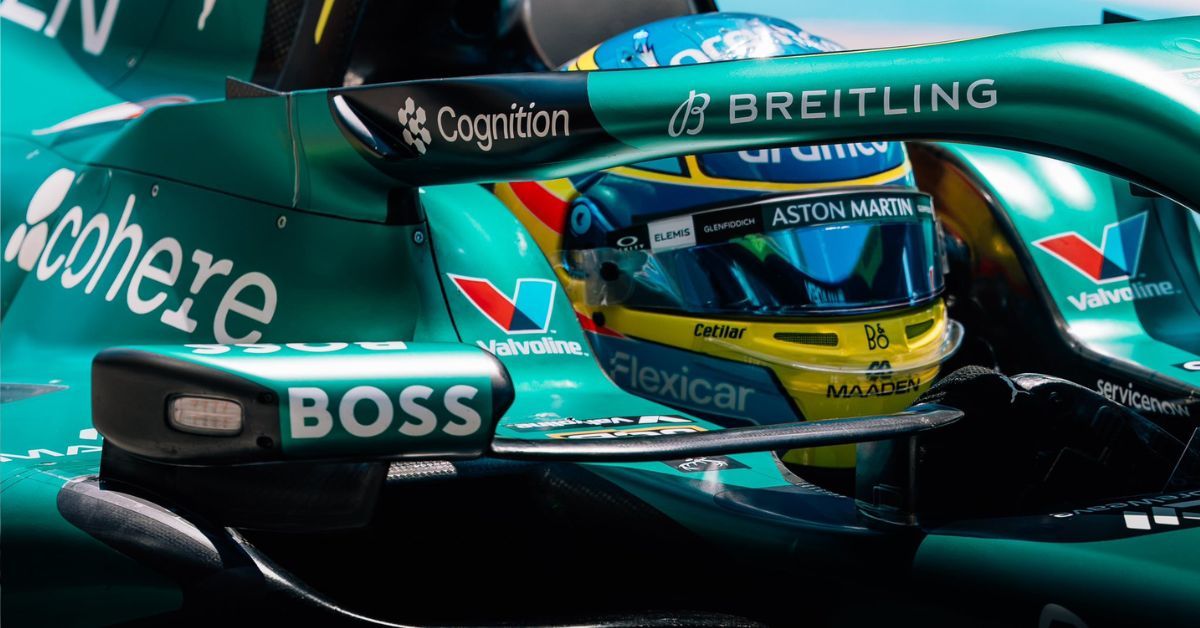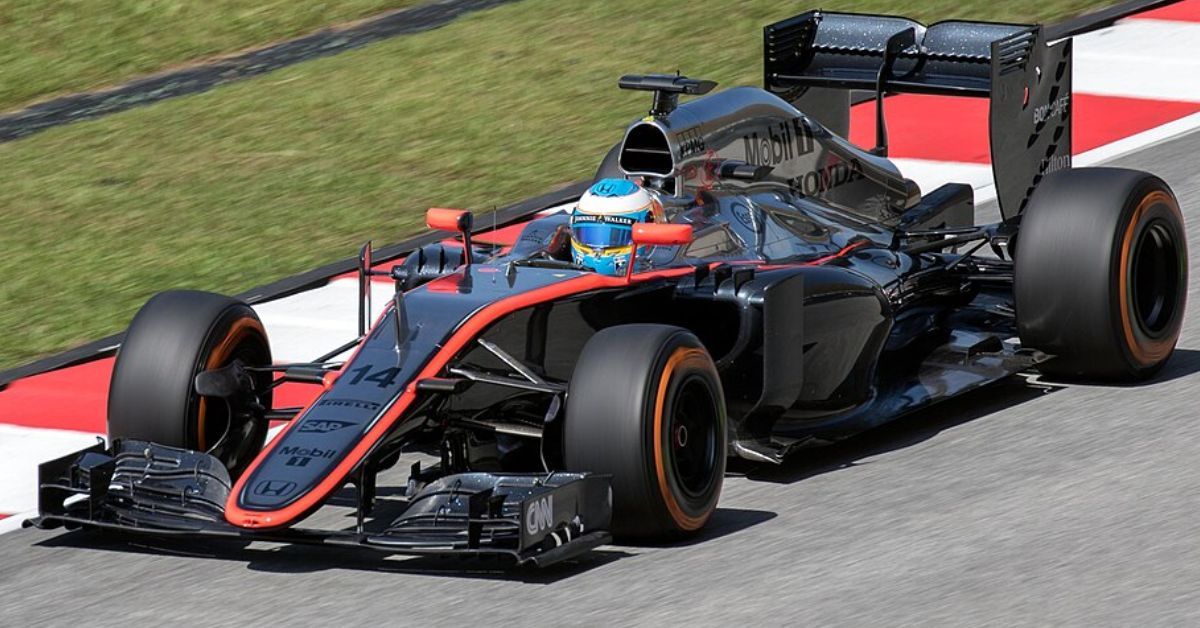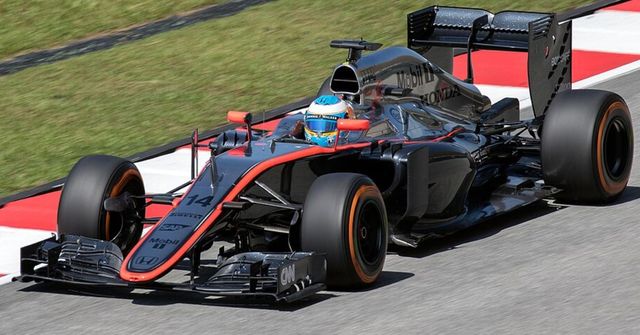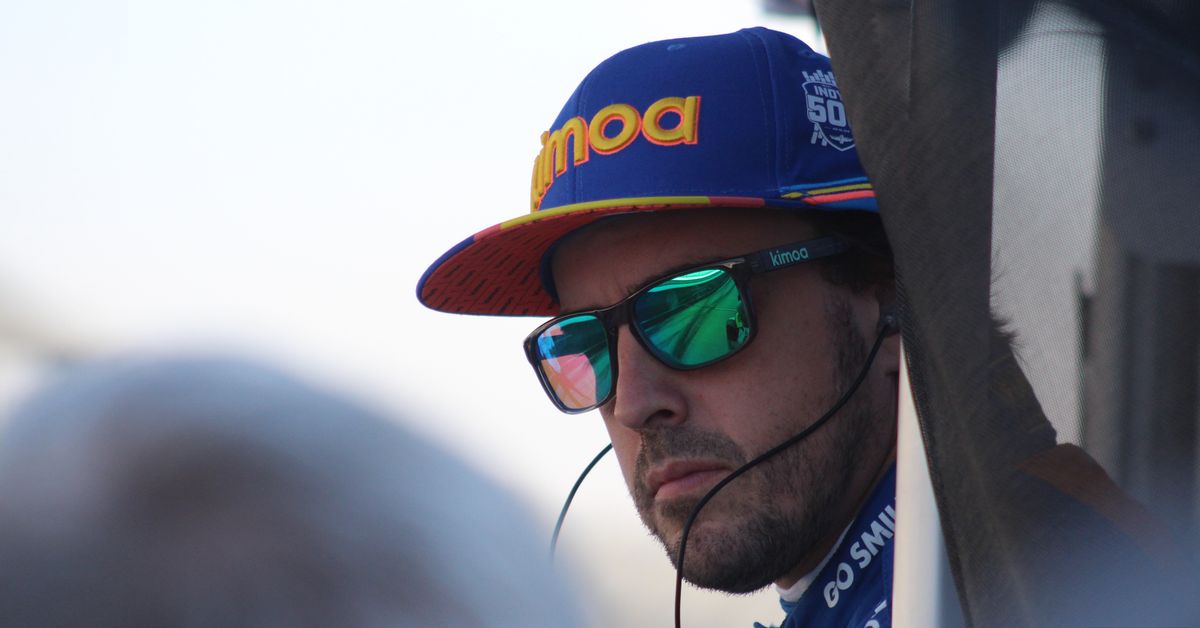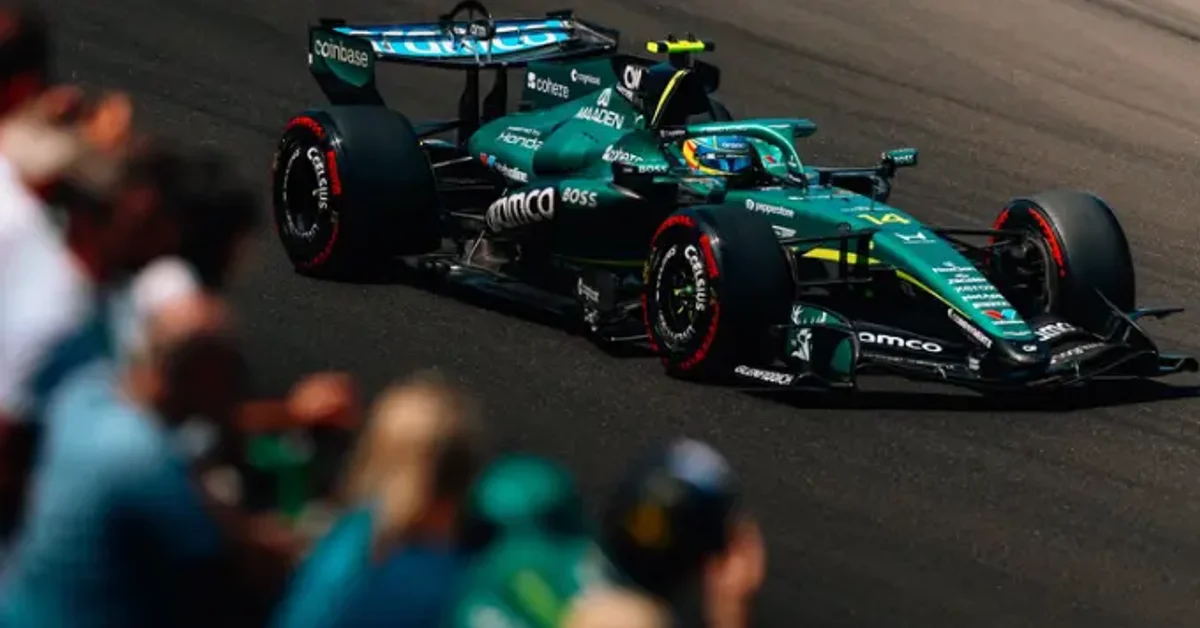

Fernando Alonso has been starting Formula 1 races at the Hungaroring since 2001. Twenty-three starts and a quarter of a century later, he is still doing it. No active driver's Hungarian record stretches back further, and few tell a bigger story.
It is a record that begins with a broken Minardi and runs through six different teams, one unforgettable win, and a wheel that rolled away from a certain result. Here is Alonso at the Hungarian Grand Prix, by the numbers.
The 2003 win that launched a career
Alonso's first Formula 1 victory came at the 2003 Hungarian Grand Prix. He took pole for Renault, led every meaningful lap, and became the youngest race winner in the sport's history at the time. It is still his only win at the circuit, and one of the most important results of his life.
That afternoon turned a fast young driver into a future world champion. Back-to-back titles followed in 2005 and 2006, and the Hungaroring is where the belief started.
Two poles and two different stories
Alonso has started from pole in Hungary twice, in 2003 and 2009. The first became a win. The second became one of the cruelest retirements of his career.

In 2009 he again put the Renault on pole, but a loose wheel worked its way off after a pit stop and ended his race, turning pole position into zero points. Pole to nothing, with a strong result seemingly there for the taking.
Fernando Alonso's Hungarian GP record year by year
The full sheet is a tour through modern Formula 1. Minardi, Renault, McLaren, Ferrari, Alpine and Aston Martin all appear in the team column, a span almost no other driver can match.
Five podiums stand out across the years: the 2003 win, third in 2004, second for Ferrari in 2010, third in 2011, and second again in 2014. Those Ferrari seasons kept him in the fight even when the car was not the fastest on the grid.
| Year | Team | Grid | Finish | Points |
|---|---|---|---|---|
| 2001 | Minardi | 18th | DNF (brakes) | 0 |
| 2003 | Renault | 1st | 1st | 10 |
| 2004 | Renault | 5th | 3rd | 6 |
| 2005 | Renault | 6th | 11th | 0 |
| 2006 | Renault | 15th | DNF (driveshaft) | 0 |
| 2007 | McLaren | 6th | 4th | 5 |
| 2008 | Renault | 7th | 4th | 5 |
| 2009 | Renault | 1st | DNF (wheel) | 0 |
| 2010 | Ferrari | 3rd | 2nd | 18 |
| 2011 | Ferrari | 5th | 3rd | 15 |
| 2012 | Ferrari | 6th | 5th | 10 |
| 2013 | Ferrari | 5th | 5th | 10 |
| 2014 | Ferrari | 5th | 2nd | 18 |
| 2015 | McLaren | 15th | 5th | 10 |
| 2016 | McLaren | 7th | 7th | 6 |
| 2017 | McLaren | 7th | 6th | 8 |
| 2018 | McLaren | 11th | 8th | 4 |
| 2021 | Alpine | 9th | 4th | 12 |
| 2022 | Alpine | 6th | 8th | 4 |
| 2023 | Aston Martin | 8th | 9th | 2 |
| 2024 | Aston Martin | 7th | 11th | 0 |
| 2025 | Aston Martin | 5th | 5th | 10 |
| 2026 | Aston Martin | 16th | 14th | 0 |
Six teams, one quarter of a century
Read the team column from top to bottom and you are reading a history of the paddock. Renault, McLaren, Ferrari, Alpine and Aston Martin have all carried Alonso around the Hungaroring, across two retirements from the sport and two returns.
The 2026 Hungarian Grand Prix was not one for the highlight reel. Alonso qualified 16th and finished 14th for Aston Martin, out of the points on a weekend that belonged to Lando Norris and the front-runners. The full 2026 Hungarian Grand Prix classification has the complete order.
But the number that matters most is the one at the very top of the table. 2001. It should be noted, twenty-five years on, Fernando Alonso is still lining up in Hungary, and that longevity may end up being the most remarkable statistic on the entire sheet.