
Somebody asks me some version of this every few weeks, and the honest answer is longer and less encouraging than the one they were hoping for. So let me write it down properly, once, including the parts that usually get skipped. So let's answer how to become a racing driver in India.
Search this and you'll find a Red Bull article with ten generic tips, a Quora thread, and an Italian karting school's blog post. Not one of them mentions a single Indian series, fee or governing body. That's the gap this is trying to fill.
The short version
Kart from as young as you can manage, for five to seven years. Get an FMSCI licence. Then Formula 4, which in India means the F4 Indian Championship. Then Formula Regional, FIA Formula 3, FIA Formula 2, and Formula 1 if the results and the money and the timing all hold at once.
Almost nobody completes that sequence. Not pessimism, arithmetic: there are twenty Formula 1 seats in the world.
Step one: the licence
Motorsport in India is governed by the FMSCI, the Federation of Motor Sports Clubs of India. Nothing you do competitively counts without a licence from them, and the licence is graded, so which one you need depends on what you're entering.
Get this early and get it right. Check the current grades, process and fees with the FMSCI directly, because this is the part that changes most often and the part secondhand articles get wrong most often.
Step two: karting, and no, you can't skip it
Five to seven years of competitive karting is the standard advice from people who've actually made the climb, and it isn't a formality to rush. Karting builds racecraft: wheel-to-wheel judgement, starts, tyre management, the habit of qualifying well. Skip it and you arrive in a single-seater quick over one lap and lost in a pack.
Here's the part Indian families need to hear clearly, and almost nobody says out loud.
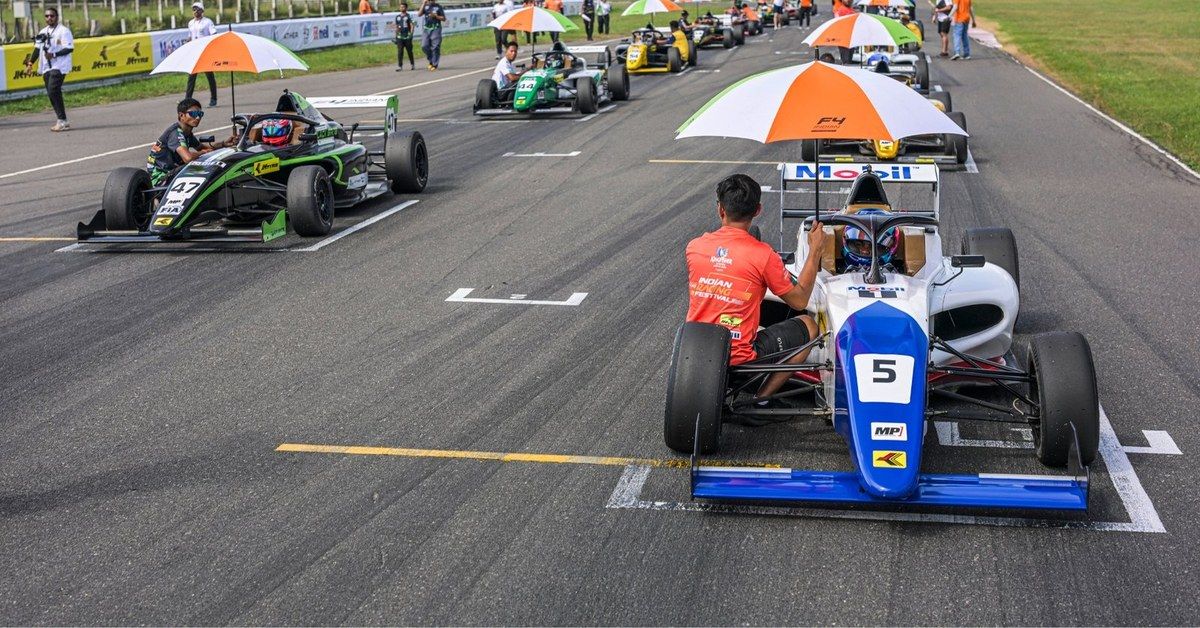
Indian karting grids are small. A domestic championship round might run ten to fifteen entries. A comparable European round runs sixty-plus. Winning a fifteen-car field tells you, and anyone scouting you, considerably less than finishing tenth in a sixty-car one.
That's the most consequential strategic fact in Indian motorsport, and it forces a decision most families aren't ready for. Race at home cheaply and win, or go to Europe expensively and get beaten by better drivers while learning faster. There's no universally right answer. There is a wrong one, which is spending six years winning small domestic fields and assuming the results transfer.
Step three: Formula 4
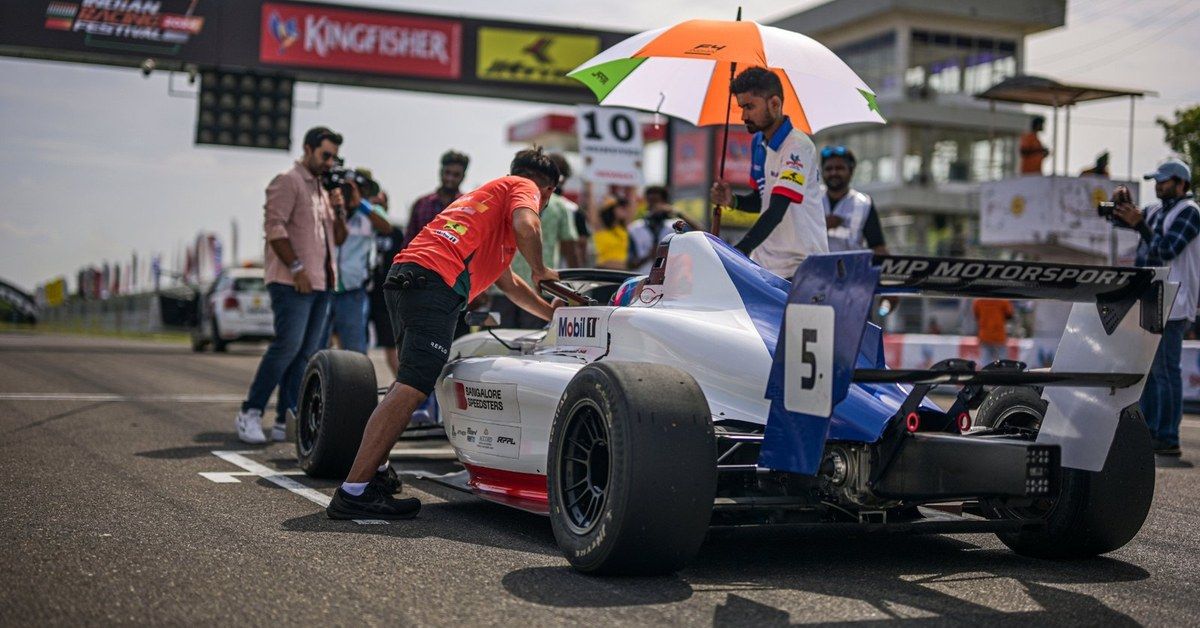
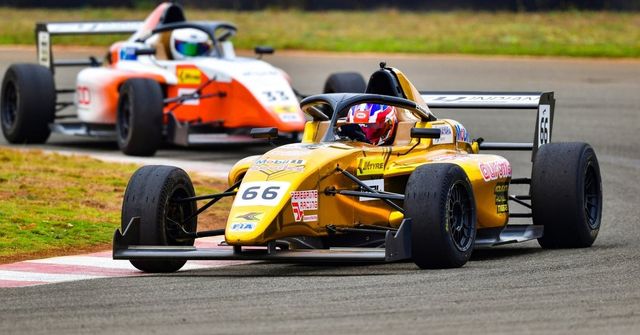
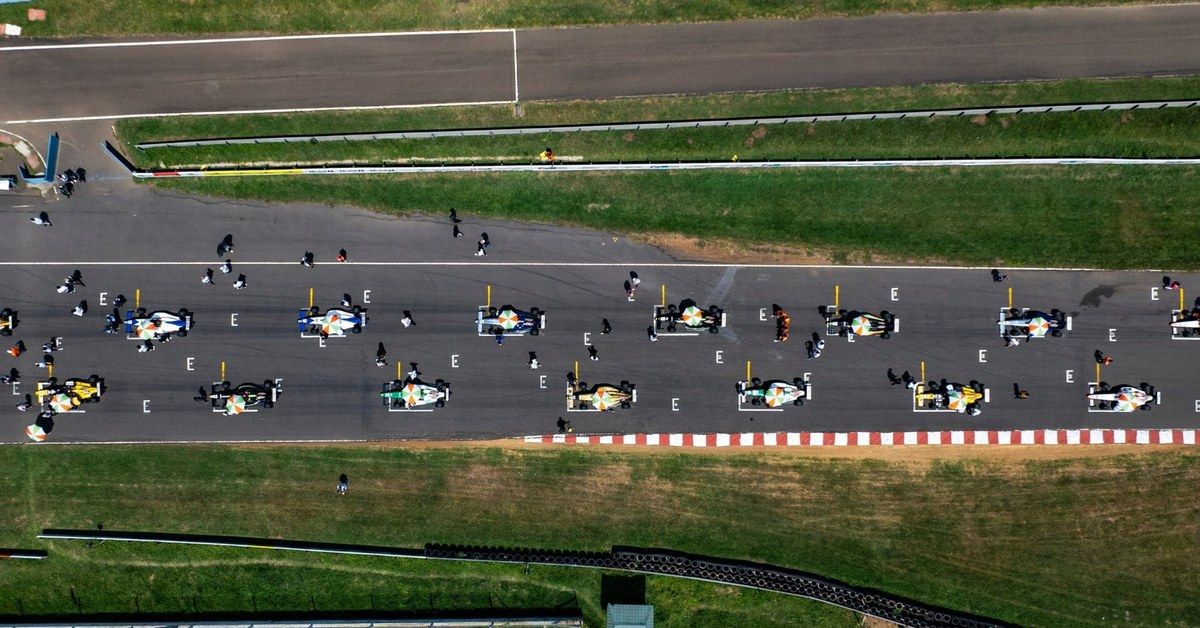
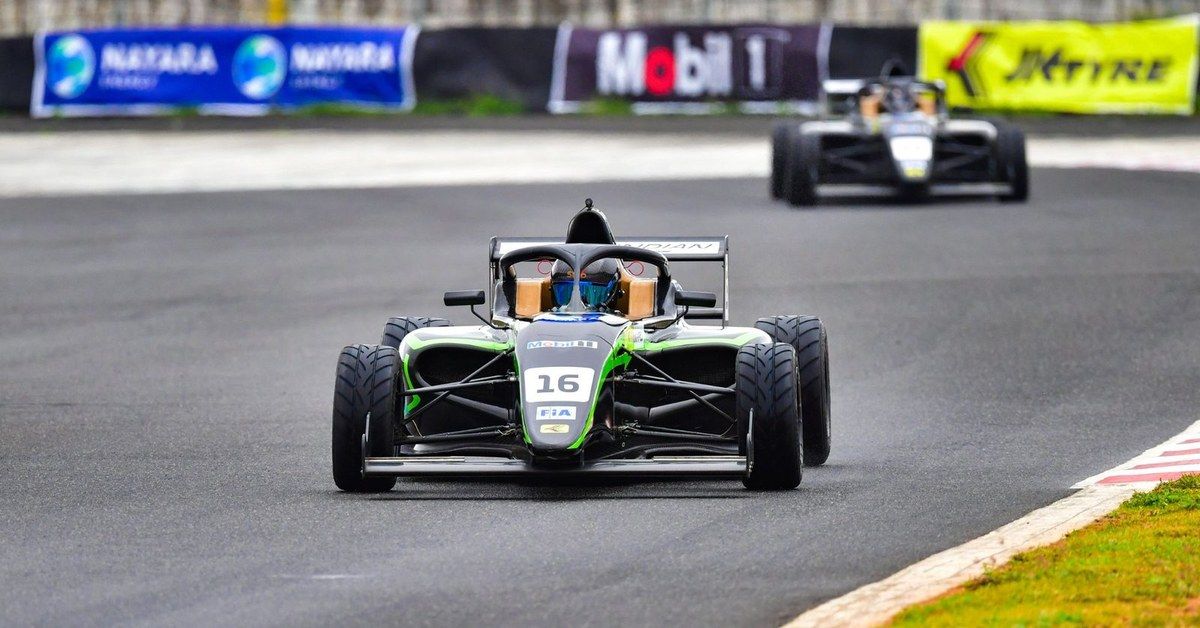
First real race car. In India that means a Mygale M21-F4 with an Alpine engine, identical for everyone, six rounds, three races a round.
Do it here rather than elsewhere because of cost. An Indian season has been reported around 70,000 euros against Italian F4's 500,000-plus, and we've gone through that comparison properly in what it actually costs.
Be clear-eyed about it, though, because the domestic ladder stops at this rung. The advertised prize for winning is a seat in the Formula Regional Indian Championship, which has never run a race. Details here.
What a Formula 4 season genuinely produces regardless of that is two things a career needs: FIA superlicence points, and a season of lap times in a spec car against a known field. That second one is the only evidence a European team can actually evaluate.
The current grid and standings are here, and the series is explained in the complete guide.
What about age limits
Formula 4 exists to take drivers straight out of karting, which in practice means 15 and 16 year olds. The FIA sets a minimum for the category and national championships apply it alongside their own licensing rules. Confirm the current minimum with the FMSCI and the series before planning around it, because it's moved before.
The practical answer to what people are really asking: if you're starting from zero at 18, the Formula 1 route is closed. Plenty of professional motorsport isn't.
The "after 12th" question
Enough people search this that it deserves a direct answer. There's no course, degree or entrance exam that leads to a racing seat. Nothing you study after school makes you a driver.
What education does is give you the fallback the overwhelming majority of aspiring drivers end up needing, and if you point it at motorsport engineering, a genuine route into the industry from the other side of the pit wall. India has a real and growing motorsport engineering sector. It employs vastly more people than it does drivers.
If you're 17 and haven't karted, that's the conversation worth having.
Step four and upward
Formula Regional, then FIA Formula 3, then FIA Formula 2. Each step costs several times the one below it, and by F2 a season is a seven-figure proposition in euros. Almost every current F1 driver came through F2 or its direct equivalent.
Superlicence points accumulate across these categories and Formula 1 requires forty of them, which is why a driver's category choices matter as much as their results.
The Indian record
Two Indians have raced in Formula 1: Narain Karthikeyan and Karun Chandhok. Jehan Daruvala and Kush Maini have both raced in Formula 2 without converting it.
That's the complete history, and it's worth understanding before committing a decade. We've written it up in Indian drivers in Formula 1.
Start young. Kart seriously. Get your results in the biggest field you can afford to race in. Treat Indian F4 as the cheapest legitimate way to bank superlicence points and produce evidence, because that's exactly what it is. Find a mentor who's done it, because the mistakes here are expensive and most are avoidable. And keep the education, because the odds are what they are and pretending otherwise has never helped anyone.
If you want the mechanical differences between the categories before committing to any of them, F4 vs F3 vs F2 vs F1 is the place to start.